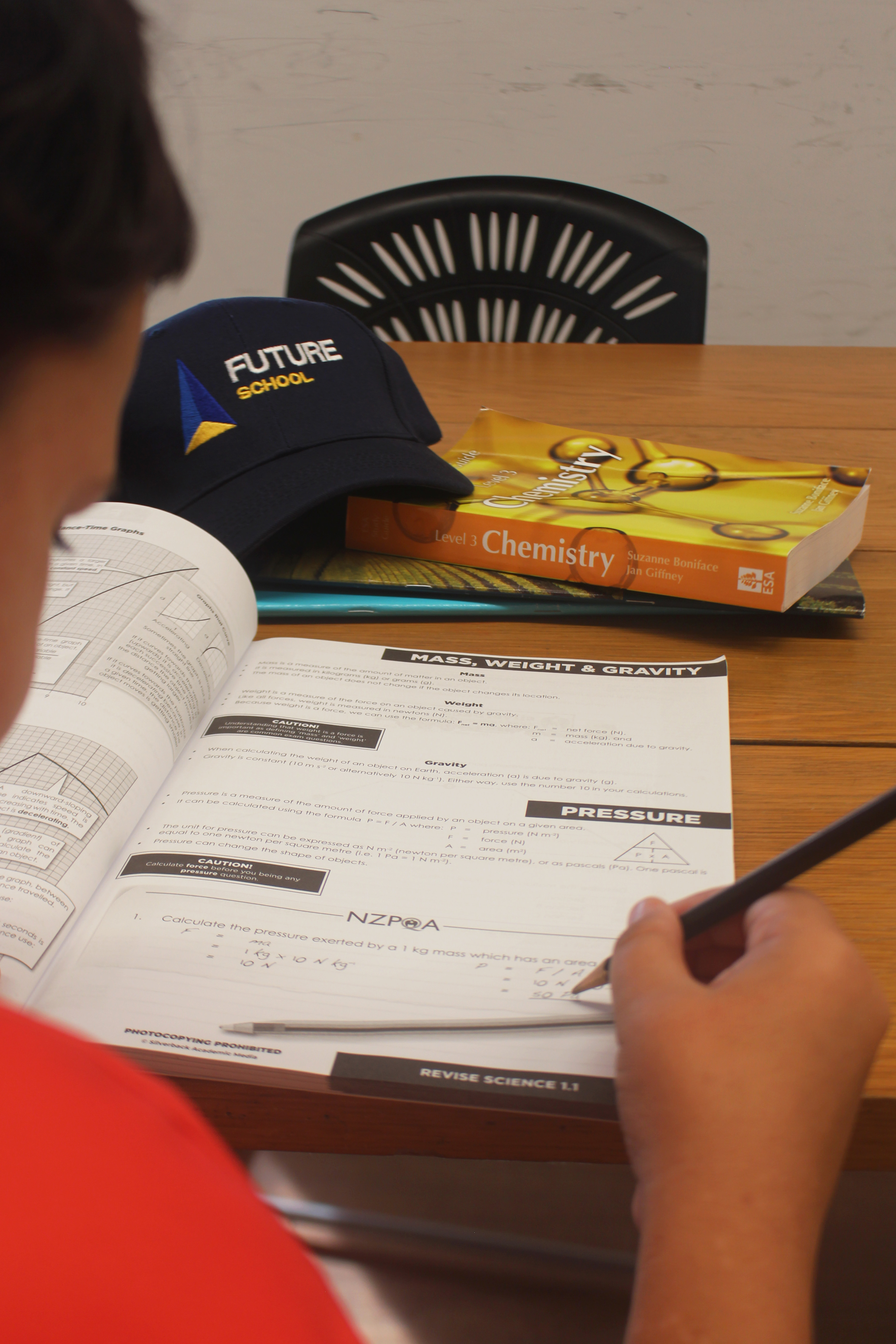
How do academic skills prepare students for life beyond school? Looking at how literacy, numeracy, communication and critical thinking form the foundations of future readiness, helping students develop skills they may not fully appreciate today but will rely on for years to come.
We believe that having strong academic foundations remains one of the most important parts of education.
Reading, writing, mathematics, critical thinking and communication will always underpin every pathway a student may pursue in the future. Even though the world is rapidly changing, these core skills remain essential. The difference is not whether students learn these skills, but how they learn to apply them.
Often, academic learning and future readiness are presented as separate ideas. One focuses on exams and achievement, whilst the other focuses on innovation and real world skills. At Future School, we believe the two are closely connected.
Every future entrepreneur needs strong communication skills to pitch an idea. Every future engineer relies on mathematics to solve problems. Every future scientist depends on literacy to analyse research and communicate findings. Even careers that do not yet exist will require people who can think critically, learn independently and be able to adapt to new challenges.
This is why academic skills remain at the centre of what we do.
When these students that participate in focused literacy and numeracy learning and are being supported by teachers and personalised pathways, creates a foundation that gives students the tools they need to engage confidently with more complex ideas and challenges as they grow.
What makes our approach different is that students are also given opportunities to apply these skills in meaningful ways.
For example, a student developing a product idea through our Product Masterclass may use be able to use literacy skills to create a proposal, mathematics to calculate costs and communication skills to pitch their concept. Students working on environmental projects may use data collection, analysis and research. Even collaborative projects, no matter the pathway taken, will rely on reading, writing, listening and collaborative skills.
When students can see how their academic learning connects to the world around them, those skills begin to feel more meaningful. Yet often, some of their learning is not immediately obvious. A student may not realise that presenting to their classmates is helping them develop confidence in public speaking, or that working through a disagreement in a group project is teaching them how to effectively collaborate with others.
Many of these skills reveal their value years later, whether it's speaking in a job interview, pitching an idea to colleagues, writing a professional email, analysing information or solving a complex problem, students often find themselves drawing on capabilities they first developed during their school years. While they may not always recognise it at the time, these experiences definitely build the foundations for future success.
Future readiness is not simply about preparing students for a particular job or industry. It is about helping them develop the knowledge, confidence, and adaptability needed to navigate whatever opportunities and challenges lie ahead.
At Future School the strongest futures are built upon the strongest foundations.
.png)
.png)